Chiropractic Care
Living with ongoing discomfort or feeling like your body is not working as well as it should can affect far more than a single part of your day. It can change how easily you move, how comfortable you feel at work, how well you recover after activity, and even how confident you are in your body.
What Chiropractic Care Involves
Chiropractic care focuses on the relationship between the spine, joints, nervous system, and movement. When certain areas of the body are not moving well, it can place extra strain on surrounding muscles and joints. Over time, that can contribute to stiffness, tension, reduced mobility, and general physical discomfort.
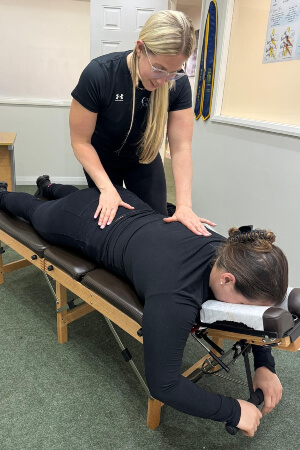
Through detailed assessment and hands-on care, we aim to improve joint motion, reduce unnecessary tension, and support the way your body moves as a whole. This is a natural, hands-on approach that does not rely on medication or surgery. Instead, it is centred on helping your body function more efficiently and comfortably.
A Connected View of the Body
It can help to think of the body as one connected system rather than a collection of separate parts. Your spine plays an important role in supporting posture, balance, and movement, while also protecting the nervous system. When one area is under strain, other areas often begin to compensate. That is one reason why a problem may not always feel as simple as it first appears.
Everyday habits and physical stress can all influence how well your body functions. Poor posture, awkward sleeping positions, repetitive desk work, sporting injuries, general overuse, and previous accidents can all affect the way joints and muscles work together.
Our clinic uses posture analysis and orthopaedic testing to build a clearer picture of what may be contributing to discomfort or restricted movement, so your care can be tailored accordingly.
Our Approach to Care
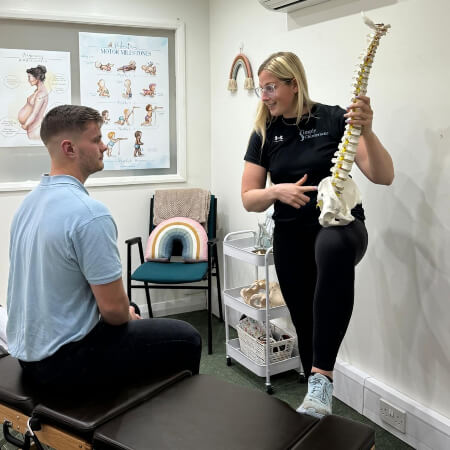
Your first visit is designed to be thorough and informative. We begin with a consultation, posture scanning, and orthopaedic testing so we can better understand how your body is moving and where support may be needed. We then explain our findings in straightforward language, talk through your options, and answer any questions you may have.
Where appropriate, care may begin on the same day. Follow-up visits are typically around 15 minutes, which makes care easier to fit into a busy routine while still keeping it focused and individualised.
We also use posture scans to help track changes over time. This gives patients a clearer sense of how their body is responding and helps keep care grounded in an ongoing process of review rather than guesswork. The overall goal is to make sure your care feels personalised, practical, and easy to understand.